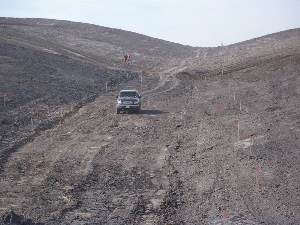
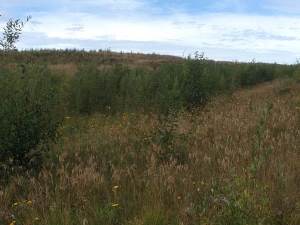
| Initial
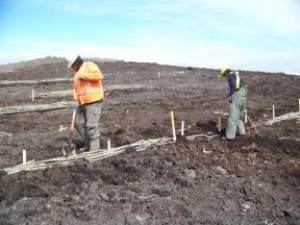
Erosion Control Measures (April/May 2004):
Soil
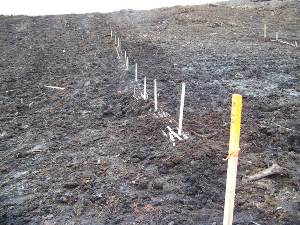
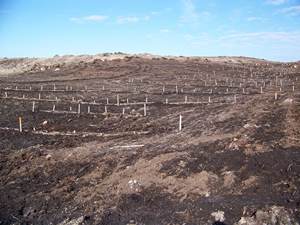
bioengineering structures were installed across
the swale in the spring of 2004, these consisted
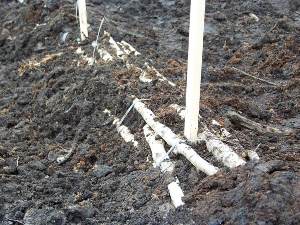
of 29 brush sills. Live cuttings used in the structures
consisted of
Willow (Salix bebbiana / exigua / scouleriana)
, Black Cottonwood (Populus balsamifera
ssp. trichocarpa) , and Red-Osier
Dogwood (Cornus stolonifera). These were
all collected during dormancy within the local
area. In the middle of each sill (lowest portion)
additional cuttings of smaller diameter were used
to improve water dispersion. As a trial, contour
fascines were installed across the swale in two
locations above the brush sills.
Locally
available muskeg (organic mulch) was spread between
the brush sills during installation. The swale
was fertilized and broadcast seeded with a nurse
crop of barley. In the upper portion of the swale
a wet depressional area (created wetland), located
at the confluence of two minor lateral swales,
was planted with live stakes (muskeg also applied
here). The site was monitored in August 2004 –
survival of brush sill cuttings was estimated
at approximately 70%, with shoot growth averaging
60 cm.
|
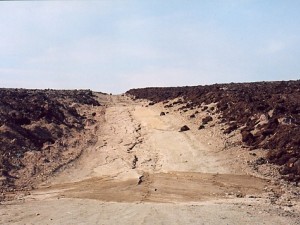
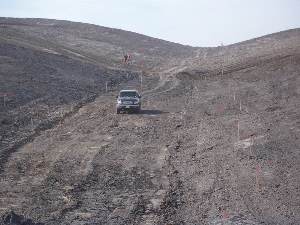
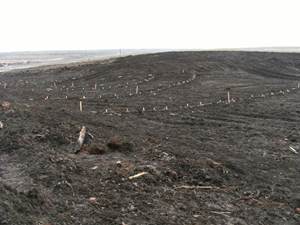
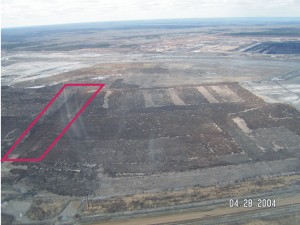
View
of Alpha swale, April 2004
(Photo:
Syncrude Canada Ltd)
|
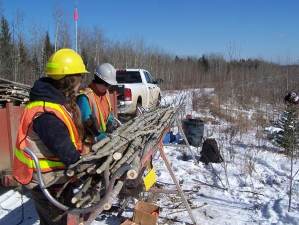
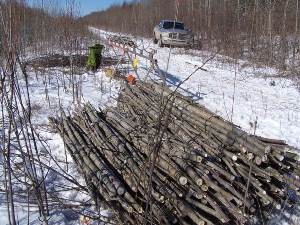
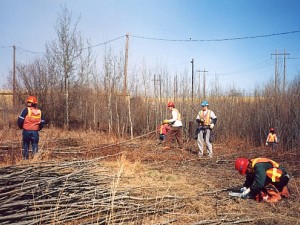
Collection
of live cuttings, April 2004
|
| |
|
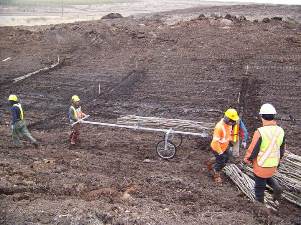
Brush
sill construction, preparation of trench
April
2004
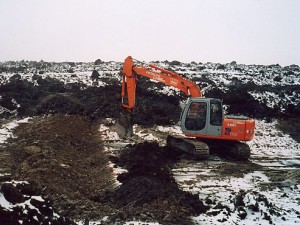
|
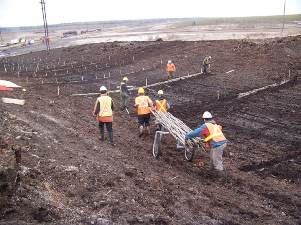
Brush
sill construction, April 2004
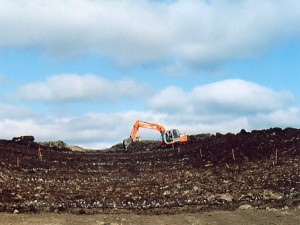
|
| |
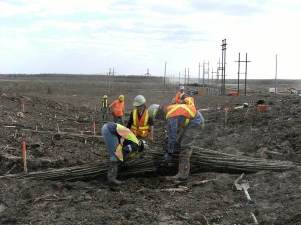
Placement
of cuttings in trench and covering middle
of sill with fine branch trimmings, April
2004.
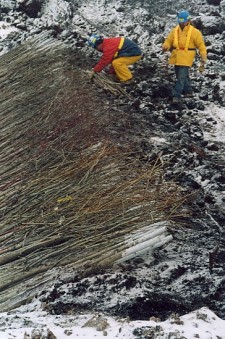
|
Backfilling
of trench, April 2004
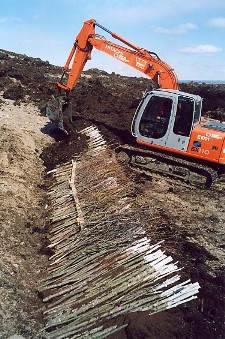
|
|
Completed
brush sill, April 2004
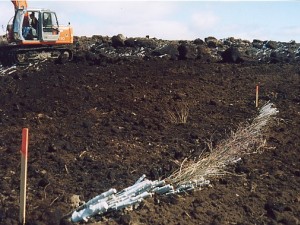
|
Depressional
area in upper portion of swale
(created wetland), with live staking,
April 2004
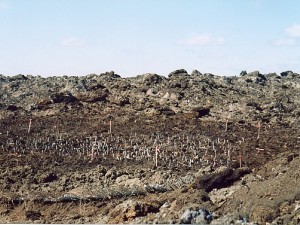
|
| |
Fascine
installed above brush sill as trial,
April
2004
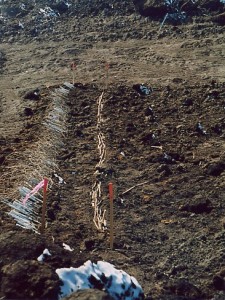
|
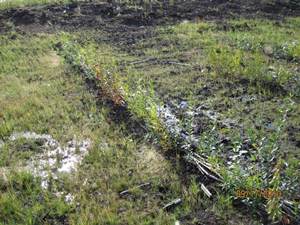
Growth
on brush sill, August 2004
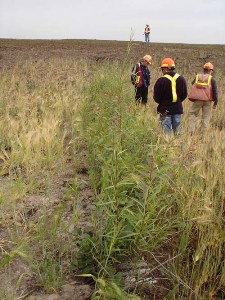
|
| |
|
| Repair
and Maintenance and Additional Work in 2005
and 2006:
Survival
and growth of the brush sills and fascines
during the summer of 2005 was assessed as
good. The trial section, where contour fascines
were installed above the brush sills, did,
however, perform much better than the brush
sill structures alone at dispersing water.
Also, based on water-flow patterns and minor
rilling development, additional structures
were found to be required in some areas.
Sections of some brush sills had poor survival
due to undermining by flowing water.
Measures
to address these problems were implemented
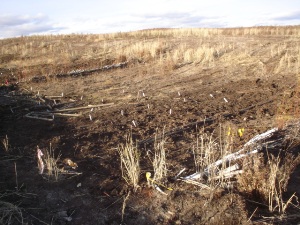
in October 2005. Additional contour fascines
were installed above all existing brush
sills. Some new brush sill structures with
adjacent fascines were also installed at
this time, along with re-planting of brush
sill sections showing high mortality, and
live staking in the centre of the swale.
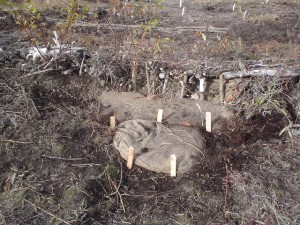
Muskeg-filled burlap sacks were used to
prevent further erosion in areas where brush
sills were undermined and channelization
of water had occurred. Broadcast seeding
of native grass mix and mycorryzae incocullant
was carried out .
Minor
maintenance work was also required after
the spring 2006 snowmelt. Implemented in
June 2006, this consisted of placing additional
muskeg-filled burlap sacks in areas of new
channel formation, manually filling rills,
removal of sediments deposited over structures,
and some re-seeding of native grasses and
fertilization.
|
|
Additional
work completed, October 2005
|
Installed
muskeg-filled burlap sacks in eroded channel,
October 2005
|
| |
|
Monitoring
Observations:
2006
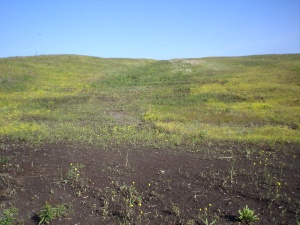
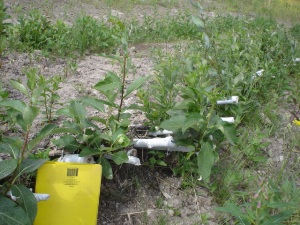
Growth
of the erosion control structures within
the swale was considered excellent when
assessed in the spring and fall of 2006.
In the depressional area at the top of the
swale, a diverse wetland plant community
was developing (partially as a result of the seed
bank contained within the muskeg placed
here and natural propagation methods such as wind, birds and mammals).
2007
The
growth of erosion control structures was
considered excellent overall when monitored
in July 2007. There was no need for additional
maintenance treatments at that time; the
work has therefore been successful in preventing
accelerated gully formation in the swale
through establishment of native vegetation
and is expected to improve with time as
vegetation becomes more established. A frog
and numerous bird tracks were also observed
in the created wetland area at the top of
the swale (a report was also received of
a moose sighting in the swale that spring).
2009
The growth of erosion control structures was considered excellent overall when monitored in July 2009. There was a minor requirement for maintenance at that time (see minor surface erosion photo) and treatments such as muskeg or compost filled burlap sacks, in conjunction with seeding, are planned in order to prevent further erosion in these areas. The work is scheduled to take place later in the 2009 field season. Overall the work was considered to be successful in preventing accelerated gully formation in the swale through establishment of native vegetation, as well as creating wildlife habitat and improving the aesthetic of this mine site.
|
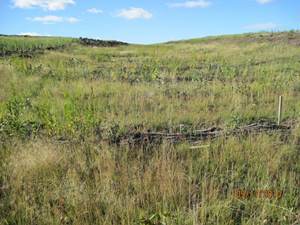
Alpha
swale, June 2006
|
Alpha
swale, June 2006
|
| |
Alpha
swale, June 2006
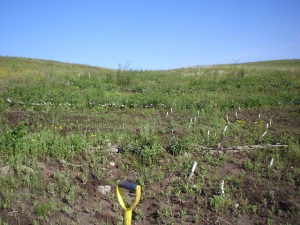
|
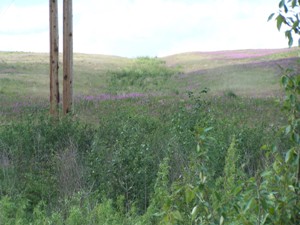
Alpha
swale, July 2007
|
|
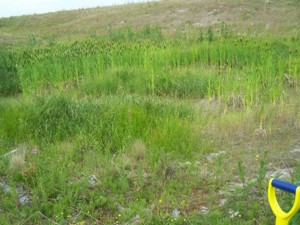
Wetland
at top of Alpha Swale, July 2007
|
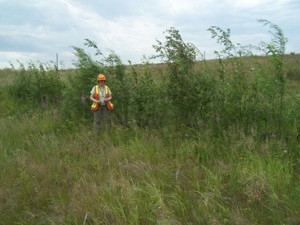
Alpha
swale, July 2007
|
| |
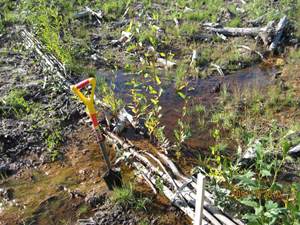
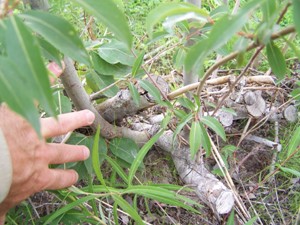
Growth
from live cuttings, July 2007
|
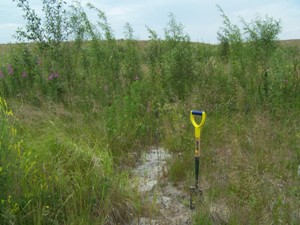
Brush
sill growth in Alpha Swale, July 2007
|
| |
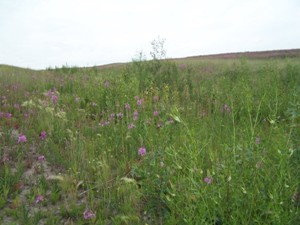
Alpha
Swale, July 2007
|
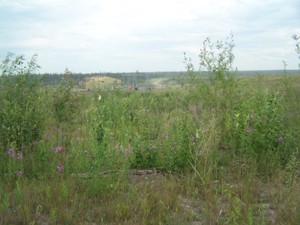
Alpha
Swale, July 2007
|
| |
Aquatic
plant establishment, July 2007
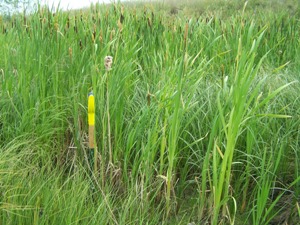
|
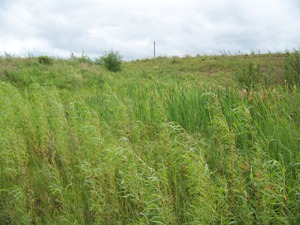
Establishing wetland upper Alpha
Swale, July 2009
|
| |
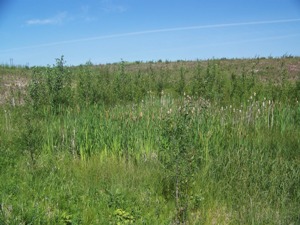
Created wetland, note Salix axigua and Populus balsamifera surrounding established aquatic species, July 2009
|
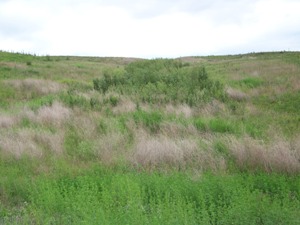
Alpha
Swale, July 2009
|
| |
|
Alpha
Swale, July 2009
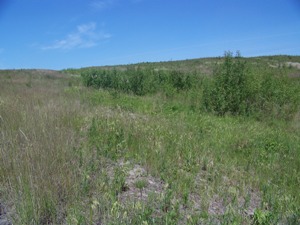
|
Alpha
Swale looking south, July 2009
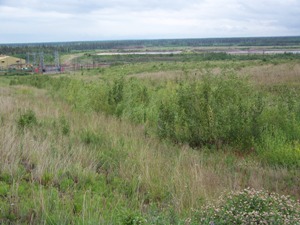
|
| |
Frog within Alpha
Swale, July 2009
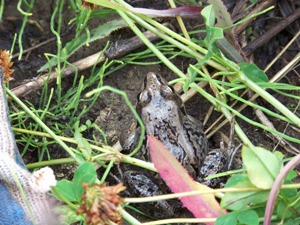
|
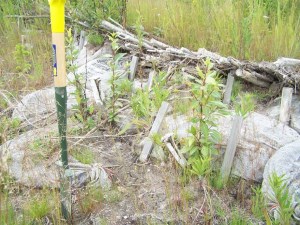
Minor surface erosion found, July 2009
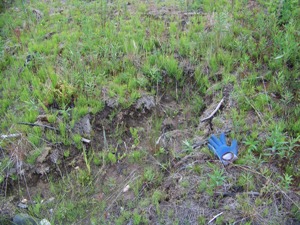
|
Monitoring Observations 2010 to 2014 / Habitat Creation:
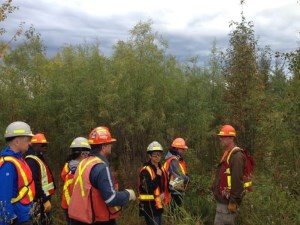
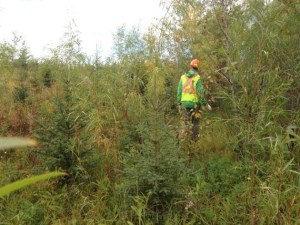
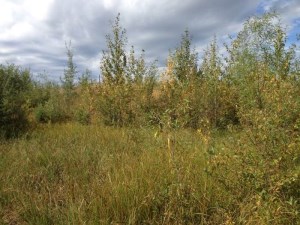
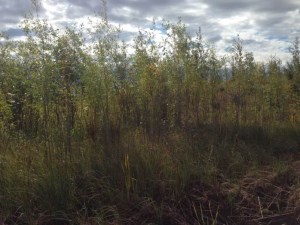
The site was monitored further in 2010, 2013 and the fall of 2014. Vegetation has become well established and there have been no signs of further erosion since the maintenance carried out in 2009.
Aquatic species such as sedge (Carex spp.) and cattail (Typha spp.) have become well established in between the installed brush sills and contour fascines. These aquatic species have colonized partially from the seed bank contained within the muskeg material used for capping and from natural propagation methods such as wind, birds and mammals. The aquatic species types colonizing the various micro sites depends on the depth of the water table. After two years the aquatic species are out competing the native grasses and legumes initially seeded (personal communication with Eric Girard, Syncrude Canada Limited). It was also observed that the combination of pioneer deciduous and coniferous species, originally planted in conjunction with the newly established aquatic species, are contributing to the creation of a wetland habitat which is highly desirable in these disturbed mine sites.
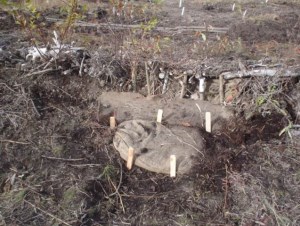
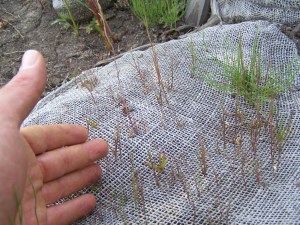
Burlap bags filled with muskeg, used to repair the eroded depressions caused by splash erosion, have been noted to work very efficiently.
>>Control of Localized Splash Erosion from 2005 to 2014 |
| |
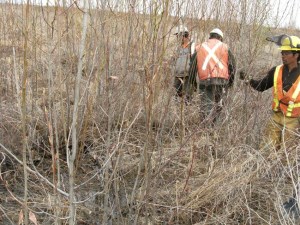
Field visit, May 2010
|
| |
|
Field visit, looking north at swale from bottom,
June 2013
|
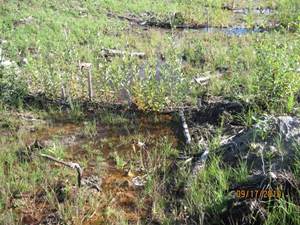
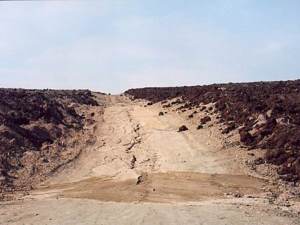
Swale prior to treatment, spring 2004
|
| |
|
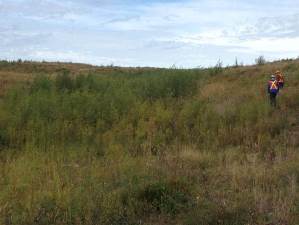
Field visit, looking at swale across from berm,
June 2013
|
| |
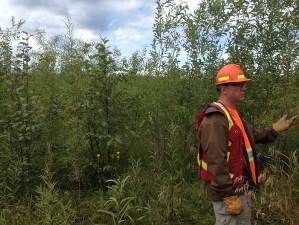
Field tour, September 2014
|
|
|
| |
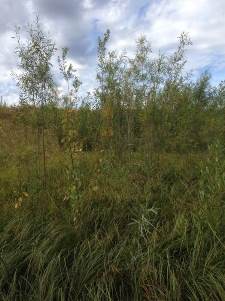
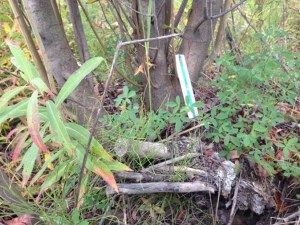
Ten years of growth on willow cutting in brush sill, September 2014
|
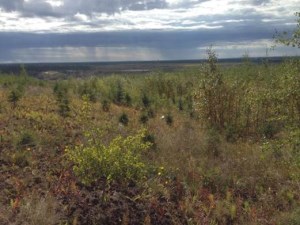
Swale looking south, September 2014
|
| |
|
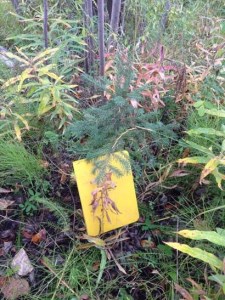
Native spruce, naturally seeded, September 2014
|
|
|
Wetland created in upper swale, September 2014
|
|
|
| |
Control of Localized Splash Erosion from 2005 to 2014: |
Burlap bags filled with muskeg, placed in eroded areas, 2005
|
Native vegetation growing through burlap while controlling splash erosion, 2006
|
| |
|
Native vegetation growth becoming established, 2007
|
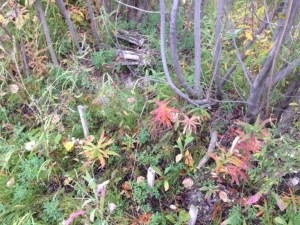
Established native vegetation within repaired area, 2014
|
| |
|
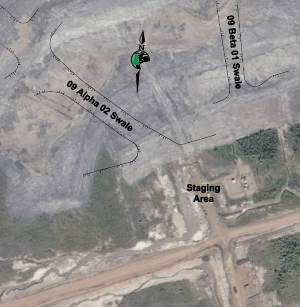
Modified Design Trial Applied to 2009 W1 Alpha 02 and Beta 01 Swales
After five years the findings at the trial site established in 2004 were reviewed and the soil bioengineering design was adjusted. The revised design used larger diameter contour fascines (30 cm) and no brush sills and was applied over two newly constructed swales (waterways) in the spring of 2010. These newly constructed swales (09 Alpha 02 and 09 Beta 01) have a combined catchment basin of approximately 66.5 ha and are located within the W1 overburden mine dump. Implementation work for the 09 Alpha 02 and 09 Beta 01 Swales project were completed in May 2010. Growth of the vegetation (i.e. seeding, seedlings and live cuttings) was monitored during the summer and fall of 2010. Minor repairs and maintenance were implemented in 2011 using burlap sacks and muskeg to fill in eroded cavities. Additional inspections were also carried out after significant rainfall events. Further monitoring took place in 2012 and no erosion was noted. Establishment of aquatic species within the applied muskeg was significant, taking over the initially applied seed mix. The site was assessed as good to excellent in regards to native vegetation establishment and control of surface erosion.
|
09 Alpha Swale 02 and 09 Beta 01 Swales, Spring 2010
|
| |
|
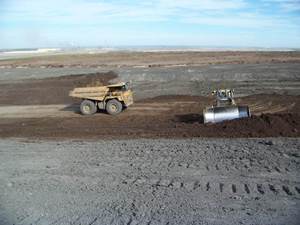
Clay cap and muskeg placement
|
|
|
| |
Collection and processing of live cuttings |
|
|
| |
Implementation, spring 2010
|
|
|
|
|
Implementation, spring 2010 |
|
|
| |
|
Contour fascines installed |
|
|
| |
|
Contour fascines installed
|
|
|
| |
Growth, fall 2010 |
|
|
| |
|
Growth, fall 2010
|
|
|
| |
|
Aquatic species colonizing site, fall 2014
|
| |
| |
|
Aquatic species colonizing site, fall 2014
|
Growth, fall 2014
|
|
|
| |
|
Swale construction, fall 2009
|
Fall 2014
|
|
|