Machine Assisted Planting
on Slope Failure above Railways
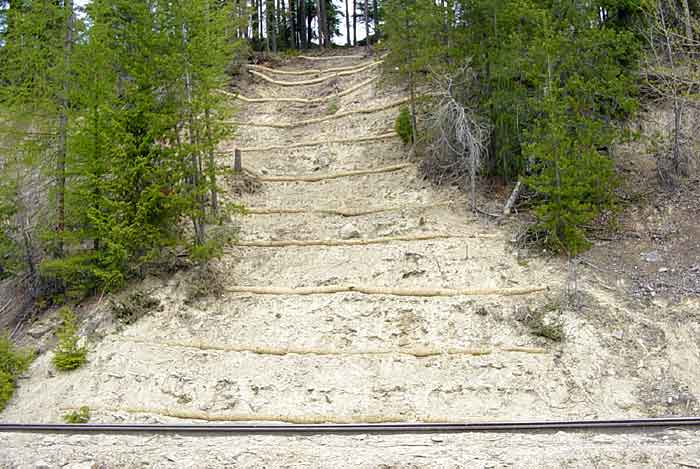
18 MILE PIT PROJECT
Location: Moyie, British Columbia
Client: Ministry of Transportation and Highways
Objective: To restore stability of the slide
site above the railroad track, and to establish vegetation
in order to reduce surface erosion processes such as
rilling and gullying to avoid further debris flow.
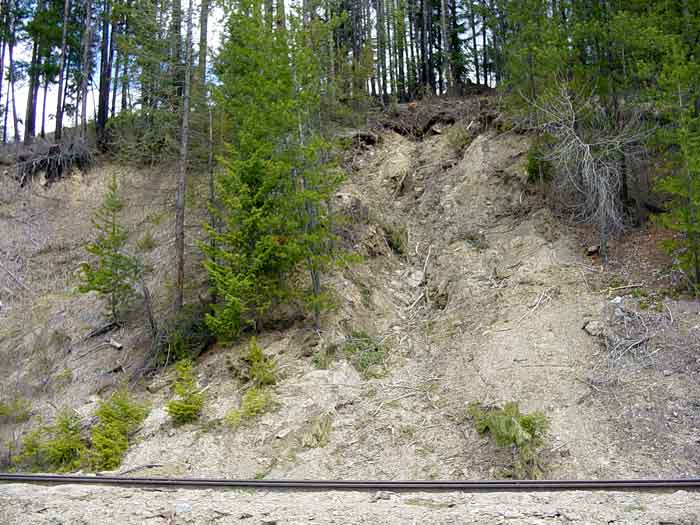
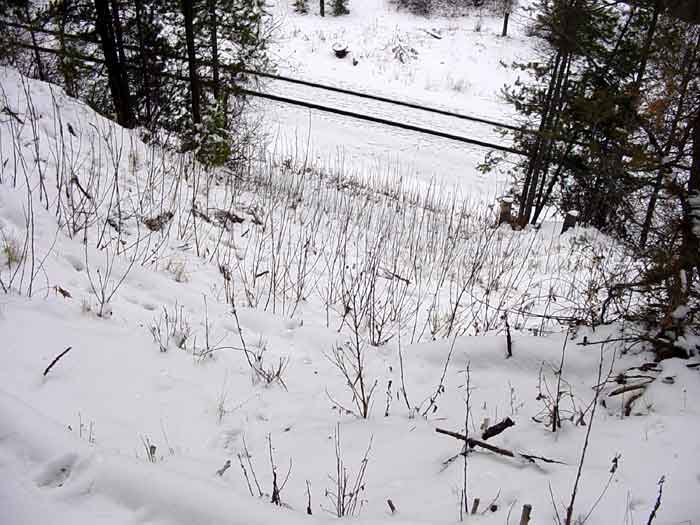
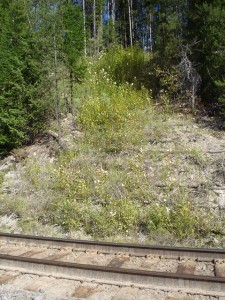
In the spring of 2003, a slide occurred below the 18-mile
Pit, depositing debris onto the railroad track below.
This debris obstructed the railroad track. The slide
was caused by diverted water above the site.
Terra Erosion
Control Ltd. was retained by MOTH in May 2003 to develop
and implement a prescription for soil bioengineering
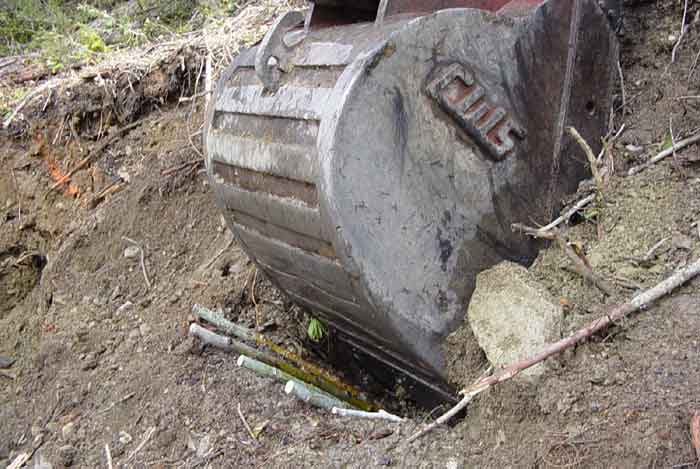
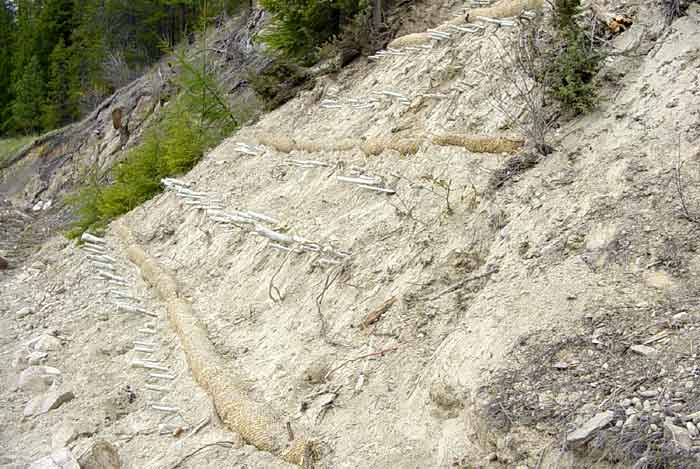
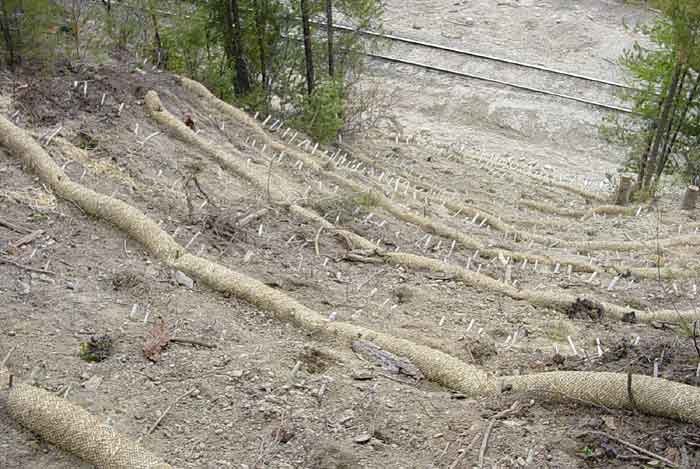
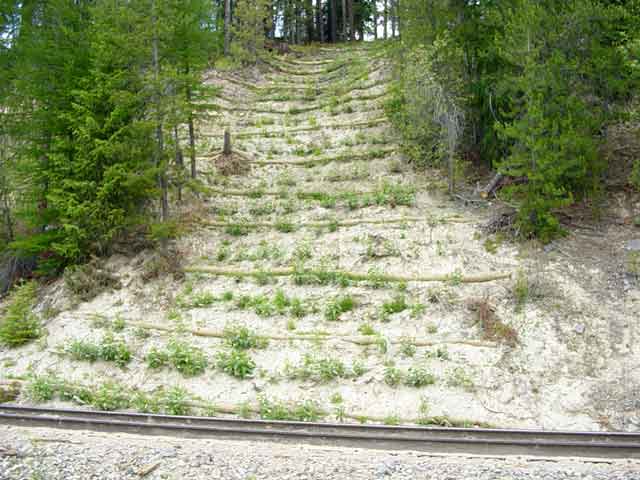
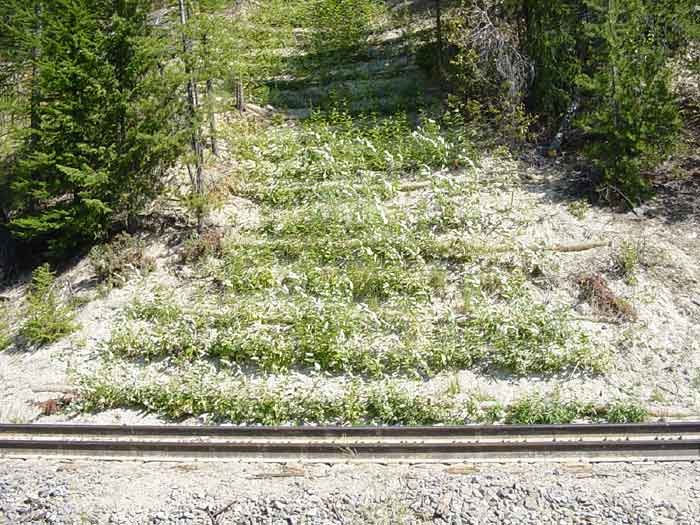
treatment for the site. A combination of brush layers
and straw wattles were used to stabilize the site.
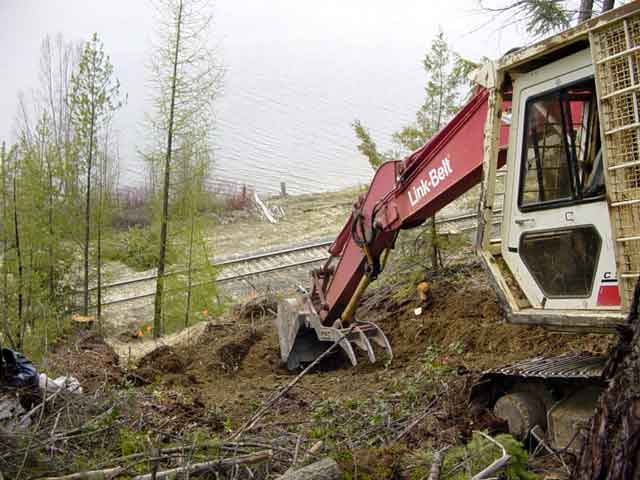
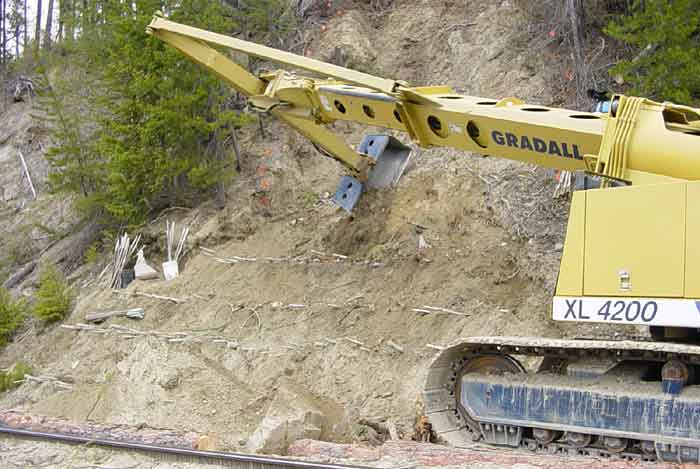
This treatment implementation was partially machine-assisted
using an excavator and a gradall hoe to build the various
prescribed brush layers onto the slope. The excavator
was also used to remove unstable materials lying between
the head scarp and the tension crack above the slide
headscarp. The remaining work was implemented manually.
A special blend of growing medium was applied to the
brush layer structures to provide nutrients and moisture
retaining capacity.
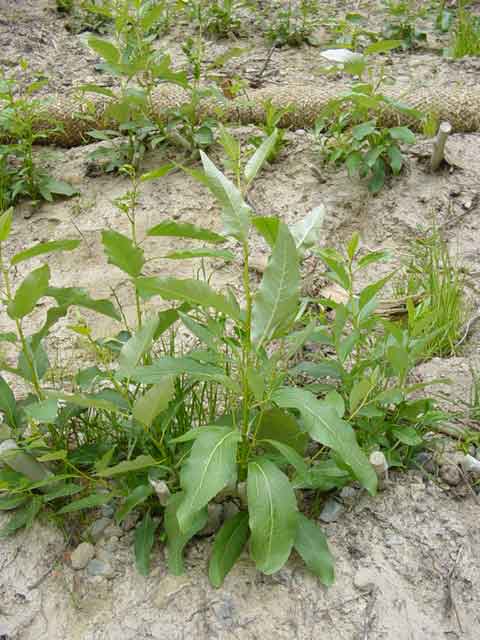
The structures were composed of the following species:
Willow (Salix scouleriana), Black cottonwood (Populus
balsamifera ssp. trichocarpa), and Red osier dogwood
(Cornus sericea). Native seedlings were planted and
a mix of grasses and legumes were applied between the
brush layer structures to address surface erosion and
provide further slope stabilization.
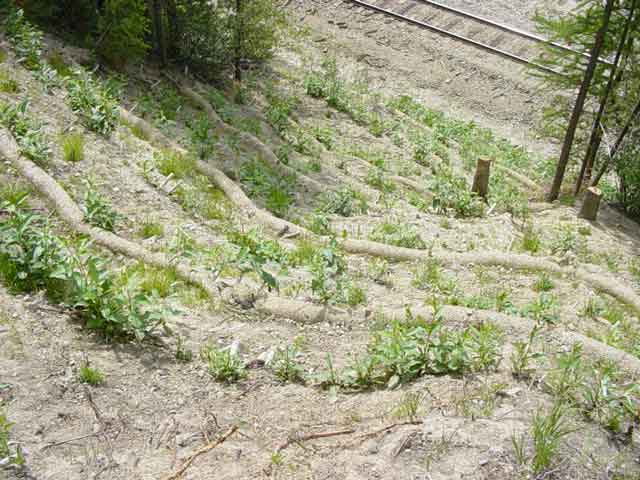
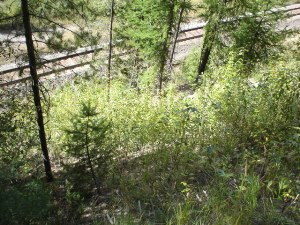
The site was
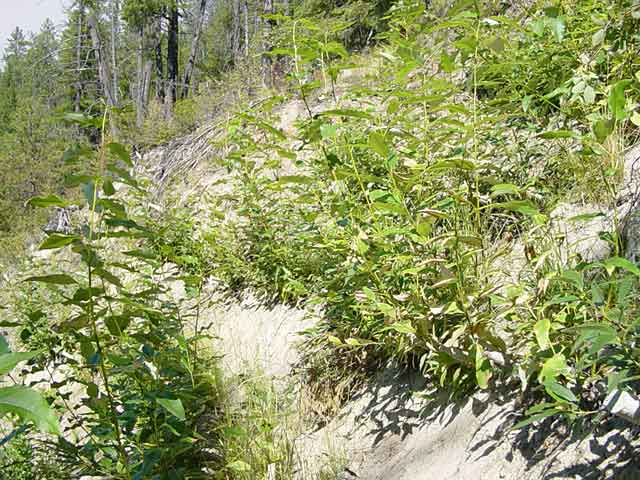
monitored the following summer and fall of 2003. Although
the province of British Columbia underwent an intensive
drought with several large forest fires during that
summer, the 18 mile pit site thrived with vegetative
growth without any irrigation, establishing native vegetation
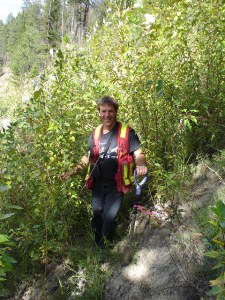
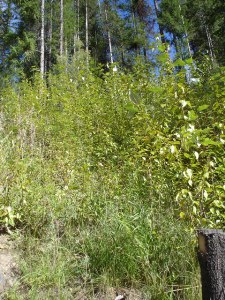
at the site. Subsequent
monitoring was carried out during the fall of 2005.
Average growth of 2.0 m in height was observed on the
upper 2/3 of the site, with some mortality found on
the lower portion. Overall survival was estimated at
approximately 85%.
|